Categories
WA DUI News

Lawmakers Plan for Harsh New DUI Laws

capitalBy Lauren Williams, legal blogger for The Law Office of Randolph H. Wolf

Recent high profile DUI cases in Washington State have led lawmakers to propose some of the harshest and unprecedented DUI penalties in the country. Governor Jay Inslee and a group of legislators from both parties have proposed a plan that would result in charges being filed more quickly and jail sentences being lengthened.

One aspect of the plan even seeks to prevent offenders from buying alcohol. The governor touted the law as “the most aggressive, the most effective, the most ambitious” change to state DUI laws ever. The cost to tax payers was not provided, but the governor said that the cost would not be insignificant.

The governor’s plan would require that those arrested for DUI be charged within two days (instead of weeks or months, which is common practice in some jurisdictions). The plan would also require people charged with drunk driving to have an ignition interlock device installed on their vehicle before it could be returned, a restriction that seems to disregard the notion of “innocent until proven guilty.”

Proposed Penalties for people with Multiple DUI Convictions

The law would also require a six-month minimum jail sentence for a second DUI conviction and a one-year minimum sentence for a third DUI conviction. Currently, the mandatory minimum sentence for second and third time DUI convictions ranges from 30 to 90 days in jail. Additionally, alcohol detection devices that are worn on the ankle could be required for second time DUI offenders. The cost of the devices is estimated at $13-$18 per day and would be paid for by the offender.

The most restrictive law would be the 10 year prohibition on alcohol purchases for third time offenders. The alcohol prohibition would be enforced by creating a special driver’s license and requiring businesses that sell alcohol to check the identification of all purchasers, regardless of age. This would be the first law of its kind in the entire country.
 

Categories
WA DUI News

Target Zero has Questionable DUI Quota Requirement

By Lauren Wiliams, staff writer at Michael J. Brennan’s Law Blog.

Target Zero is Washington State’s highway safety plan that calls for reducing highway deaths to zero by the year 2030. Since 2010, more than 35 police agencies have launched Target Zero teams in King, Pierce, and Snohomish counties.

Teams include state troopers, county sheriff’s deputies, city officers, and tribal police officers. Target Zero teams focus on the violations of driving while impaired (DUI), speeding, and failure to wear a seat belt.

Officers have also been assigned enforcement zones to patrol. For example, in Pierce County, officers have focused a great deal of their attention on 6th Street in Tacoma and Main Street in Puyallup (the location of several bars and night clubs). In King County, the focus is in the neighborhoods of Queen Anne, Capitol Hill, Belltown, and some parts of Burien, Renton, and Redmond.

Officers who are part of the Target Zero team have been directed to initiate at least three stops per hour. This means that officers are on the lookout for minor violations to ensure that their quota is met. Common reasons for stopping a vehicle include:

  • Defective license plate lamp
  • Lack of mud flaps
  • No third brake light
  • Touching the skip line

Once an officer has stopped a vehicle, it gives them free range to investigate the driver for DUI. The pressure of meeting a quota can result in stops where probable cause was not established.

At Beckwith DUI Law, we frequently come across cases where the constitutional rights of our clients has been violated by law enforcement. It is your right to speak to an attorney during any type of criminal investigation and it is also your right to not respond to the questions that the police ask.


Categories
DUI Topics

DUI License Suspension Process

After a DUI arrest in Washington State, there will be mandatory court dates and an automatic driver’s license suspension (unless you contest it) with the Department of Licensing (DOL). DOL consequences are independent of anything that occurs during the DUI criminal case.

Quick Guide for Contesting a DUI License Suspension

  1. From the date of arrest, you have 7 days to request a DUI hearing (to contest the license suspension). If a hearing is not requested, the license suspension will go into effect 60 days after the arrest date. The license suspension can be anywhere from 90 days to 2 years for a first offense.
  2. The hearing can be requested online or by mail, along with the $375 hearing fee. There is also an option for a hearing fee waiver if you are found to be indigent.
  3. If the hearing request is made within the allowable time frame, the DOL will set a date for a DUI hearing with one of its hearing examiners. The hearing examiners are employees of the DOL and are not judges, but they are supposed to be impartial in their decision making.
  4. The DUI hearing will take place over the telephone. The hearing examiner will only consider four issues: (1) whether you were under lawful arrest, (2) whether the officer had reasonable grounds to believe that you had been driving or were in actual physical control of a vehicle while under the influence of liquor or drugs, (3) whether you were properly advised of the Implied Consent Warnings, and (4) whether you were over the legal limit or refused the breath test.
  5. After the hearing is over, the hearing examiner will either make a decision on the hearing date or mail out a decision after the hearing.
  6. Once a decision has been made, you may appeal it within 30 days through the superior court in the county that you were arrested in.
  7. If the Department of Licensing maintains the suspension, you may be eligible to drive with an ignition interlock device in your vehicle for the duration of the suspension. You should not apply for an ignition interlock license without first consulting with an attorney, since the right to a DUI hearing and appeal will be waived once an ignition interlock license is issued.

The Role of An Attorney at the DUI Hearing

It is a good idea to be represented by an attorney at this hearing. Your lawyer may request that the police officer or other witnesses be subpoenaed before the hearing. They can also question witnesses, present evidence, and offer testimony during the hearing.

At Beckwith DUI Law, we fight for clients at their DUI hearing and throughout their criminal case. We have a proven track record in the courts of King, Pierce, and Thurston County, including Tacoma, Seattle, Bellevue, Puyallup, and Olympia, WA. Contact us today for a free consultation.
[fancy_list style=”triangle_arrow” variation=”slategrey”]

[/fancy_list]

Categories
WA DUI News

Continuous Alcohol Monitoring (CAM) Devices

North Carolina HB 494: Expanded Authorization for Continuous Alcohol Monitoring (CAM) Devices

By Maggie Marquez Jaynes, Esq

Continuous alcohol monitoring, which requires the abstinence from alcohol consumption for a period of time as a term of pretrial release or probation, has been highly controversial and cost prohibitive since its approval in 2007. A continuous alcohol monitoring (CAM) device is much like an ankle bracelet worn for house arrest or used for GPS tracking that monitors a person’s sweat for the presence of alcohol and transmits that result to the provider of the device. However, unlike the device worn for house arrest or used for GPS tracking, CAM costs far exceed the one time $90 fee for the house arrest/GPS tracking devices – installation fee of $75 plus daily costs of $12 for each day of monitoring, which are passed on to the receipt of the CAM device.

Recently, CAM authorization is increasing regardless of the prohibitive costs. In 2011, Laura’s Law was passed, creating a new Aggravated Level One punishment for DWI convictions requiring as a condition of probation abstinence from alcohol for a minimum of 120 days and verified by a CAM device. This Act authorized judges to: 1) impose CAM as a pretrial release condition for defendants charged with DWI and 2) require CAM for up to the full term of probation for Level One or Two DWI convictions.

In 2012, HB 494 expanded authorization for CAM in pretrial releases to include any criminal offense committed on or after December 1, 2012 and required positive screenings to be reported to the district attorney. Similarly, this act broadens the authorization for alcohol abstinence and CAM device use as a condition of community or intermediate punishment or as a special condition of probation in criminal cases generally “when alcohol dependency or chronic abuse has been identified by a substance abuse assessment”. N.C.Gen.Stat. 15A-1343 (a1)(4a) and (b1)(2c). Additionally, CAM has been authorized in Driving While License Revoked (DWLR) convictions where the license was originally revoked due to impaired driving revocation.

Regardless of the cost, the authorization of CAM as a term of pretrial release or condition of probation has expanded. The costs of CAM are no longer capped at $1,000 yet judges are authorized to consider the defendant’s ability to pay however not in the case of Aggravated Level One DWIs. Notably, the act provides that “the court must not impose CAM if it finds good cause that the defendant should not be required to pay of the costs of CAM”. N.C.Gen.Stat. 20-179(k4). Whether this imposition by the legislature renders the use of continuous alcohol monitoring devices moot is yet to be seen.

Attorney Maggie Marquez Jaynes is an associate with King Law Offices, PLLC, in Shelby, North Carolina.

Categories
DUI Topics

DUI Refusal Laws in Washington State

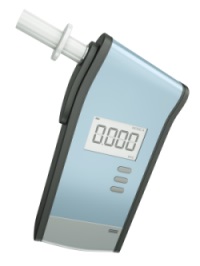
Portable Breath Test MachineIn Washington State, DUI penalties are enhanced for drivers who refuse to take a breath test at the police station. Under the Implied Consent Law, a person who drives within WA State is considered to have consented to a blood or breathalyzer test if he or she is arrested for DUI.

The intent of the law is that the breath or blood test will be administered, unless the person explicitly refuses. The purpose of the law is to discourage individuals from driving under the influence and to remove the driving privileges of those who do.

It is not uncommon for drivers to take the optional portable breath test on the roadside and then refuse to take the required breath test at the police station. If the police officer does not clearly communicate what is optional and what is required, this can be an important defense.

Penalties for Refusing the Breath Test

In Washington State, DUI is a criminal traffic offense. This means that a conviction will go on your criminal record as well as your driving record. The charge is a gross misdemeanor that can result in the following consequences:

  • License Suspension
  • $5000 fine
  • Alcohol/Drug treatment requirements
  • Jail time of up to 364 days
  • Ignition interlock requirement
  • Probation
  • High Risk Insurance

The following is an example of how penalties differ for those who take the breathalyzer test and for those who refuse to take the breath test:

First offense:

 Breath/Blood Test  Under .15  Over .15  Refusal
 License Suspension  90 days  1 year  2 years
 Mandatory Jail Time  1 day  2 days  2 days


Second Offense:

 Breath/Blood Test  Under .15  Over .15  Refusal
 License Suspension  2 years  900 days  3 years
 Mandatory Jail Time  30 days  45 days  45 days


Third Offense:

 Breath/Blood Test  Under .15  Over .15  Refusal
 License Suspension  3 years  4 years  4 years
 Mandatory Jail Time  90 days  120 days  120 days

Criminal & DOL Case

If you are arrested for DUI, there will be two cases against you: One with the court and one with the WA State Department of Licensing. Both cases are independent of each other, which means that even if your case is dismissed in court, you could still lose your driver’s license, and vice versa.

You must request a DOL hearing within 7 days; otherwise your license suspension will go into effect automatically. An experienced attorney can handle both the DOL hearing and the criminal court case.

How do I Know if I Have a Prior Offense?

An offense is considered to be a “prior offense” for sentencing purposes if it occurred within the last 7 years. The prior offense could be any of the below:

  1. DUI
  2. Physical Control
  3. Vehicular Homicide
  4. Vehicular Assault
  5. Negligent Driving (if originally charged as DUI)
  6. Reckless Driving (if originally charged as DUI)
  7. Reckless Endangerment (if originally charged as DUI)
  8. A deferred prosecution that was successfully or not successfully completed

Defending DUI Refusals

In order to prove a DUI refusal charge, the prosecutor will need to prove that your driving was affected by your level of impairment, since there is not a breath test entered into evidence. Your lawyer can raise arguments in regards to why you may have refused (such as confusion or a medical issue) or your lawyer may be able to argue that there is insufficient evidence to prove impairment.

The facts of your case, your criminal history, your driving record, and the court where your charges are filed will have an impact on your result. At Beckwith DUI Law, we have a proven track record for successfully defending clients accused of DUI refusal in King County, Pierce County, and Thurston County, Washington. We have office locations in Seattle and Tacoma and we are also available by telephone for a free consultation.
[fancy_list style=”triangle_arrow” variation=”slategrey”]

[/fancy_list]